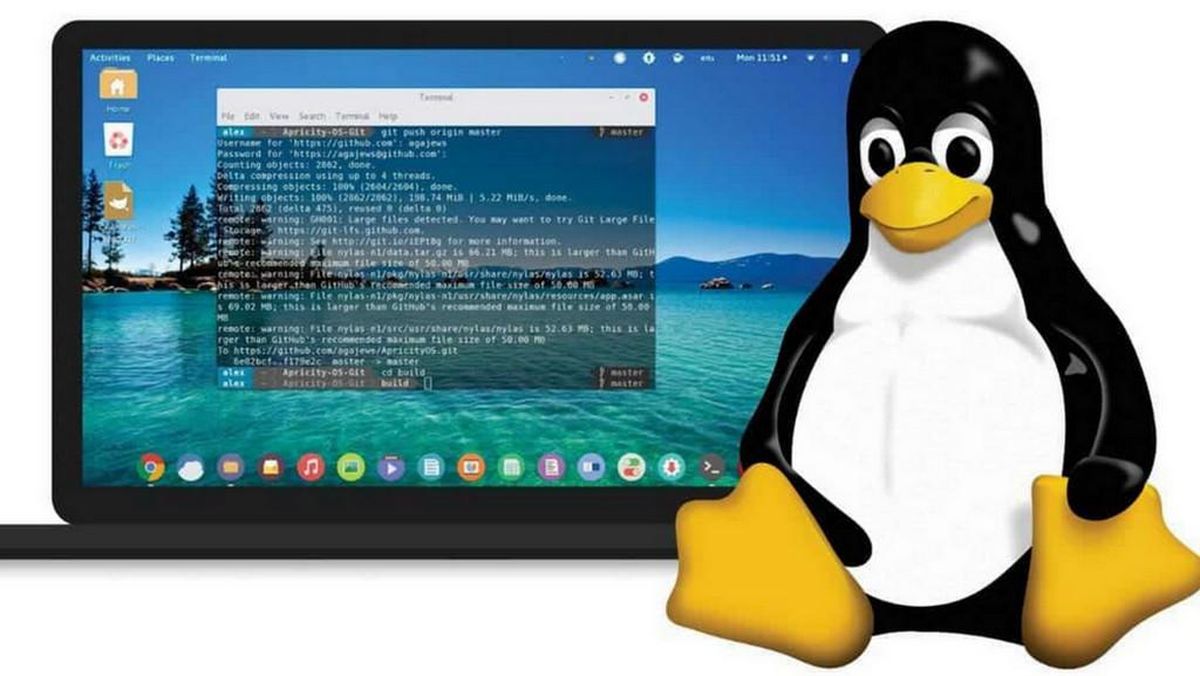
linux adalah sebuah sistem operasi sumber terbuka yang sangat terkenal. Linux dibangun oleh Linus Torvalds pada tahun 1991. Pada waktu itu, dia seorang pelajar ilmu komputer di universitas helsinki Finlandia dan memulai mengerjakan project pribadinya yaitu linux. Nama linux merupakan kombinasi dari nama pertamanya yaitu linus dan Unix, yang merupakan sistem operasi yang mengilhami proyeknya. Pada waktu itu kebanyakan sistem operasi komputer berbayar dan mahal. Dia berkeinginan untuk membuat system operasi yang bisa dinikmati banyak orang dengan gratis. Dia pada akhirnya merilis Linux sebagai software yang gratis dibawah lisensi Umum GNU. Ini berarti bahwa siapapun bisa menggunakan, memodifikasi, and mendistribusikan code sumbernya.
A popular open-source operating system is Linux. It was initially created by Linus Torvalds in 1991. At the time, Torvalds was a computer science student at the University of Helsinki, Finland and began working on the Linux project as a personal endeavour. The name Linux is a combination of his first name, Linus, and Unix, the operating system that inspired his projects. At the time, most operating systems were proprietary and expensive. Torvalds wanted to create an operating system that was freely available to anyone who wanted to use the operating system, He originally released Linux as free software under the GNU General Public License. This meant that anyone could use, modify, and redistribute his source code.
Early versions of Linux were primarily used by technology enthusiasts and software developers, but over time it has grown in popularity and is used in various types of devices such as servers, smartphones, and embedded systems. Linux is considered one of the most stable, secure and reliable operating systems and is widely used in servers, supercomputers and enterprise environments. Today, Linux is one of the most widely used operating systems in the world, with an estimated 2.76% of all desktop computers and more than 90% of the world’s top supercomputers running on Linux, and approx. 71.85% of all mobile devices run on Android, which is, you guessed it, Linux-based. The Linux community has expanded to include thousands of developers and users who work on the creation and upkeep of the operating system. Nowadays Linux has many distributions (versions) namely:
1. Ubuntu
2. Fedora
3. Arch
4. Plasma
5. KDE
6. Mint
7. Manjaro
How does Linux Work?
Think of the operating system as the engine of your car. The engine can move on its own, but when connected to the gearbox, axles and wheels it becomes a functioning car. If the engine is not working properly, the rest of the car will not work. Linux was designed to be similar to UNIX but evolved to run on hardware ranging from phones to supercomputers. All Linux-based operating systems include a Linux kernel that manages hardware resources and a set of software packages that make up the rest of the operating system. Organizations can also run Linux operating systems on Linux servers.
Kernel: This is actually a component of the “Linux” system as a whole. The kernel, which controls the CPU, memory, and peripherals, serves as the brain of the system. The operating system’s kernel is at the most fundamental level.
Desktop Environment: The user actually engages in interaction at this point. There are numerous desktop environments available (GNOME, Cinnamon, Mate, Pantheon, Enlightenment, KDE, Xfce, etc.). Every desktop environment has pre-installed programmes (file managers, configuration tools, web browsers, games, etc.)
linux adalah sebuah sistem operasi sumber terbuka yang sangat terkenal. Linux dibangun oleh Linus Torvalds pada tahun 1991. Pada waktu itu, dia seorang pelajar ilmu komputer di universitas helsinki Finlandia dan memulai mengerjakan project pribadinya yaitu linux. Nama linux merupakan kombinasi dari nama pertamanya yaitu linus dan Unix, yang merupakan sistem operasi yang mengilhami proyeknya. Pada waktu itu kebanyakan sistem operasi komputer berbayar dan mahal. Dia berkeinginan untuk membuat system operasi yang bisa dinikmati banyak orang dengan gratis. Dia pada akhirnya merilis Linux sebagai software yang gratis dibawah lisensi Umum GNU. Ini berarti bahwa siapapun bisa menggunakan, memodifikasi, and mendistribusikan code sumbernya.
A popular open-source operating system is Linux. It was initially created by Linus Torvalds in 1991. At the time, Torvalds was a computer science student at the University of Helsinki, Finland and began working on the Linux project as a personal endeavour. The name Linux is a combination of his first name, Linus, and Unix, the operating system that inspired his projects. At the time, most operating systems were proprietary and expensive. Torvalds wanted to create an operating system that was freely available to anyone who wanted to use the operating system, He originally released Linux as free software under the GNU General Public License. This meant that anyone could use, modify, and redistribute his source code.
Early versions of Linux were primarily used by technology enthusiasts and software developers, but over time it has grown in popularity and is used in various types of devices such as servers, smartphones, and embedded systems. Linux is considered one of the most stable, secure and reliable operating systems and is widely used in servers, supercomputers and enterprise environments. Today, Linux is one of the most widely used operating systems in the world, with an estimated 2.76% of all desktop computers and more than 90% of the world’s top supercomputers running on Linux, and approx. 71.85% of all mobile devices run on Android, which is, you guessed it, Linux-based. The Linux community has expanded to include thousands of developers and users who work on the creation and upkeep of the operating system. Nowadays Linux has many distributions (versions) namely:
1. Ubuntu
2. Fedora
3. Arch
4. Plasma
5. KDE
6. Mint
7. Manjaro
How does Linux Work?
Think of the operating system as the engine of your car. The engine can move on its own, but when connected to the gearbox, axles and wheels it becomes a functioning car. If the engine is not working properly, the rest of the car will not work. Linux was designed to be similar to UNIX but evolved to run on hardware ranging from phones to supercomputers. All Linux-based operating systems include a Linux kernel that manages hardware resources and a set of software packages that make up the rest of the operating system. Organizations can also run Linux operating systems on Linux servers.
Kernel: This is actually a component of the “Linux” system as a whole. The kernel, which controls the CPU, memory, and peripherals, serves as the brain of the system. The operating system’s kernel is at the most fundamental level.
Desktop Environment: The user actually engages in interaction at this point. There are numerous desktop environments available (GNOME, Cinnamon, Mate, Pantheon, Enlightenment, KDE, Xfce, etc.). Every desktop environment has pre-installed programmes (file managers, configuration tools, web browsers, games, etc.)